
Blood Flow Restriction Training (BFRT) is an advanced and innovative training technique that allows individuals to achieve strength and muscle growth similar to high-intensity training while using low-intensity exercises. At Dynamics Physio, BFRT plays a vital role in rehabilitation, active recovery, injury management, and performance enhancement.
BFRT is especially beneficial for individuals who:
Cannot lift heavy weights
Are recovering after surgery
Have joint pain or osteoporosis
Need safe strength training during rehabilitation or deload phases
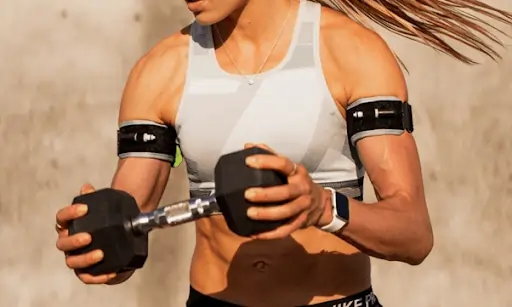
In this technique, a medical-grade tourniquet or elastic cuff is applied close to the muscle being trained — either on the upper limb (arm) or lower limb (thigh). This partially restricts blood flow, allowing low-load resistance exercises to create the same muscle environment as high-intensity training.
Blood Flow Restriction Training (BFRT), also known as occlusion training or KAATSU, is a rehabilitation and performance technique where a cuff or tourniquet is applied to the proximal part of a limb during exercise.
This process:
Partially restricts arterial inflow
Limits venous outflow
Creates a hypoxic (low-oxygen) environment in the working muscle
Originally developed in 1966 by Dr. Yoshiaki Sato in Japan, BFRT gained global recognition in the early 2000s as KAATSU training. When combined with low-load resistance (20–40% of 1RM) or body-weight/aerobic exercises, BFRT produces adaptations comparable to heavy-load strength training.
The powerful effects of BFRT are driven by unique physiological mechanisms:
Metabolic Accumulation
Restricted blood flow causes oxygen deprivation in muscles, leading to the build-up of metabolites such as lactate and hydrogen ions. This metabolic stress triggers strong anabolic signaling.
Increased Hormonal Response
Elevated lactate levels stimulate the release of growth hormone and IGF-1, activating satellite cells essential for muscle repair and growth.
Fast-Twitch Muscle Fiber Recruitment
Hypoxia causes early fatigue of slow-twitch fibers, forcing the recruitment of fast-twitch fibers — even during low-intensity exercise.
Cellular & Molecular Adaptations
BFRT activates muscle-building pathways such as mTOR signaling, increases myogenic gene expression, and enhances long-term hypertrophy.
Efficient Training Stimulus
BFRT allows significant muscle adaptation with minimal mechanical stress, making it ideal during injury recovery or post-surgery.
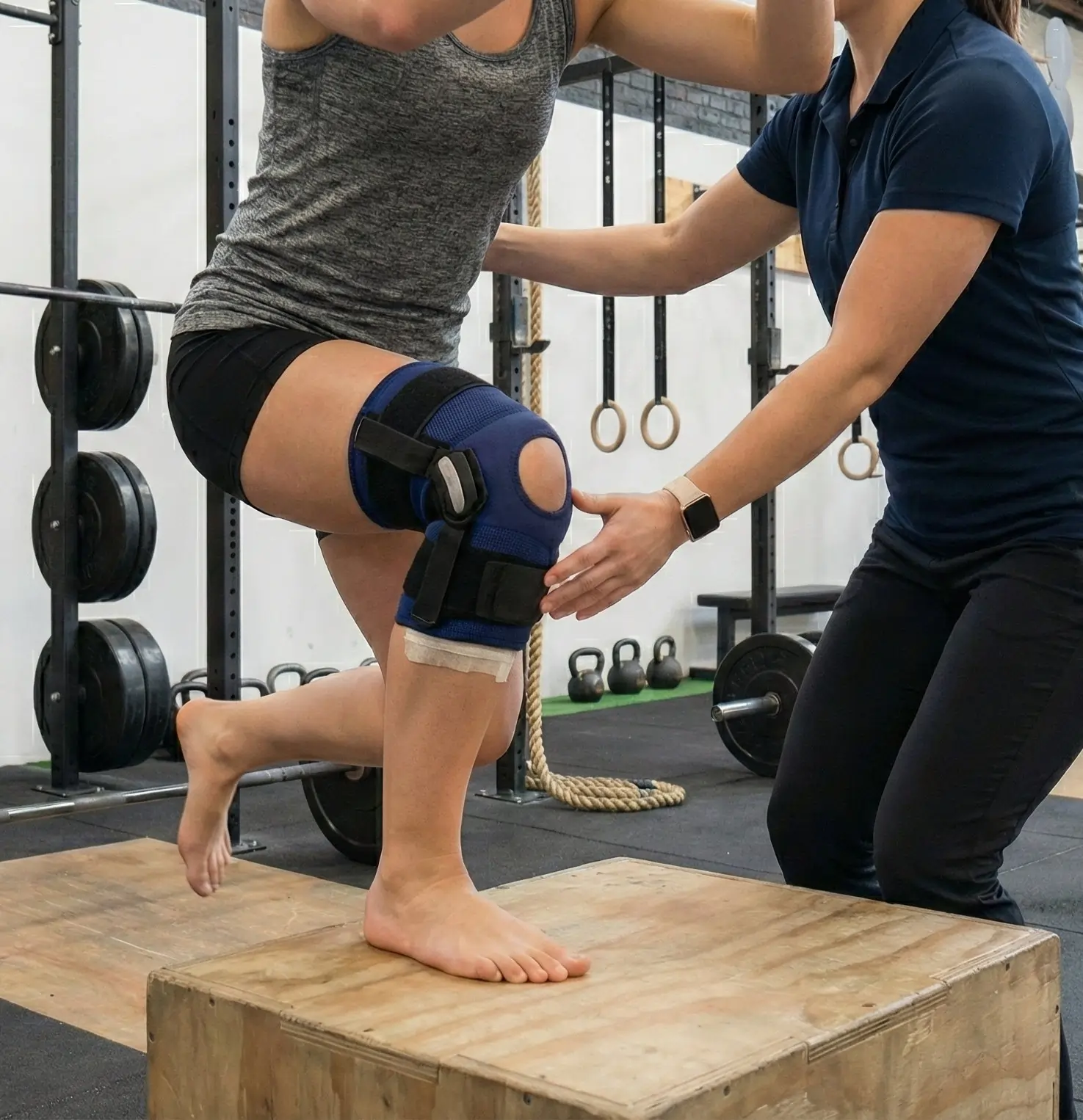
ACL reconstruction & knee surgeries
Rotator cuff repair & shoulder surgeries
Total knee or hip replacement
BFRT prevents muscle atrophy and restores strength when heavy loading is restricted.
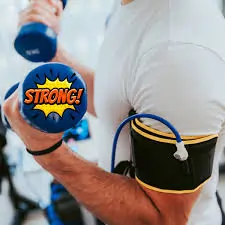
Post-injury muscle loss
Sarcopenia (age-related muscle loss)
Spinal cord injury & neuromuscular conditions
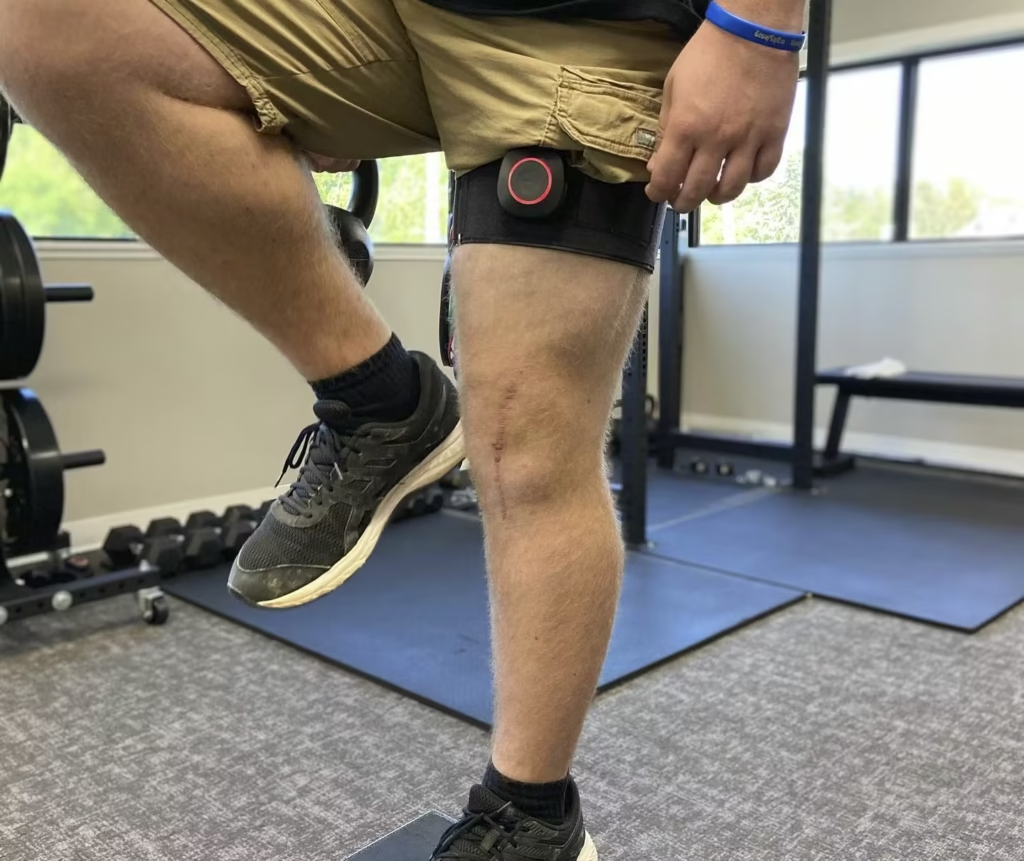
Osteoarthritis & rheumatoid arthritis
Tendonitis & tendinopathies (Achilles, patellar)
Fibromyalgia & chronic pain syndromes
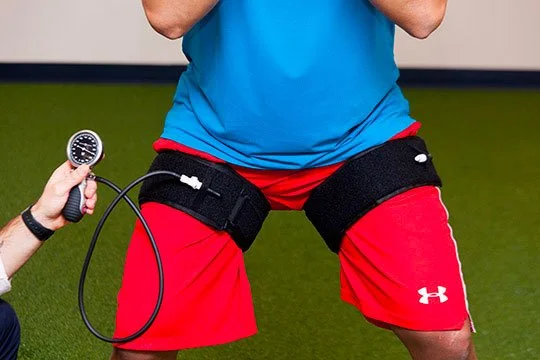
Muscle strains & ligament sprains
Stress fractures
Overuse injuries (shin splints, IT band syndrome)
Peripheral artery disease (PAD)
Chronic heart failure & post-stroke rehabilitation
Diabetes & insulin resistance
Low-load BFRT produces muscle growth comparable to heavy-load training and improves function in conditions like knee osteoarthritis and post-ACL reconstruction.
Allows early rehabilitation (as early as 2–3 weeks post-surgery) while protecting healing tissues.
Improves VO₂ max, endurance, and running economy when combined with low-intensity aerobic exercise.
Encourages type-I and type-II fiber hypertrophy, complementing traditional strength training.
Uses only 20–40% 1RM, minimizing joint and ligament strain.
BFRT is increasingly important across rehabilitation, athletic performance, and aging populations because it delivers powerful muscular and vascular adaptations with minimal mechanical load.
Accelerates muscle growth when heavy lifting isn’t possible
Enhances post-surgical and injury recovery
Promotes vascular health and angiogenesis
Improves endurance and functional performance
Supports bone, tendon, and joint health
Applicable across ages, fitness levels, and clinical condition
Bridges the gap between rehabilitation and performance
Enables early mobilization after injury or surgery
Improves vascular and metabolic health
Provides functional gains even in physically limited populations
Cost-effective, scalable, and highly personalized
Medical-grade pneumatic cuffs
~10 cm for arms, 17–18 cm for legs
Placed near the armpit or groin
Arms: 40–50% LOP
Legs: 60–80% LOP
20–40% of 1RM
Common protocol: 30-15-15-15 reps (75 reps total)
Rest: 30–60 seconds
Session duration: ~15–20 minutes
2–3 sessions per week
Athletes may use short daily cycles
Monitor pain, numbness, dizziness, swelling
Adjust or stop if adverse signs appear
Increases muscle strength and size with low loads
Enhances muscle endurance
Reduces joint and soft-tissue stress
Speeds up injury recovery and rehabilitation
Boosts growth hormone release and protein synthesis
Improves cardiovascular health and circulation
Suitable for all fitness and age levels


